
Search here...
GLASS FOR FRAMING
In this category you will find all front glazing materials for picture framing available at Intermol, ranging from lightweight and cost-effective solutions for everyday framing jobs to high-protection products for more demanding projects. Our catalogue includes clear PET, Arraglas or PS, and the premium range of Artglass glazing, making it easy to select the most suitable material according to the type of artwork, its value and the display environment.
These materials are designed to provide clarity, protection and long-term durability, ensuring that every artwork (photograph, print, illustration or document) is properly protected and presented with a clean, professional finish.
What are framing glasses and what are they used for?
Framing glass and plastics are transparent sheets placed on the front of the frame to protect the artwork and ensure proper visual presentation. They prevent dust accumulation, reduce the risk of deterioration and provide an aesthetic finish that contributes to the final appearance of the framed piece.
At Intermol, we offer a range of materials depending on the intended use, the size of the assembly and the required level of protection.
Main characteristics of glass for picture framing
High-quality framing glass is defined by several technical characteristics that determine its performance and conservation capabilities.
Transparency is essential to ensure that the colours of the artwork are displayed accurately and without distortion. High-purity glass allows uniform light transmission and prevents optical alterations.
Anti-reflective treatment is another key feature, as reflections can significantly reduce visibility. Some glazing options incorporate coatings that minimise reflections, providing a clear view even in environments with strong lighting.
Ultraviolet (UV) protection helps preserve artworks against deterioration caused by sunlight. This type of glass prevents pigment degradation over time, extending the lifespan of paintings, photographs and documents.
It is also important to consider the thickness and rigidity of the material, especially for large-format artworks, to prevent bending or breakage. Finally, weight and ease of handling directly affect mounting convenience, particularly in workshops and professional settings.
Types of glass and plastics for framing
Plastics: clear PET and Arraglas or PS (transparent polystyrene)
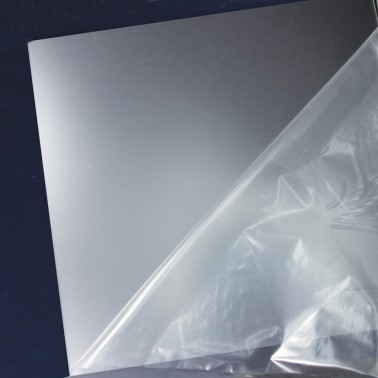
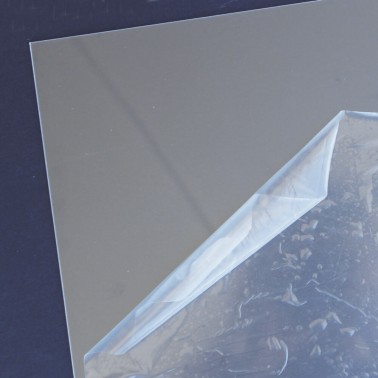
Lightweight, transparent plastic material with good resistance and optical stability. Ideal for cost-effective framing, high-volume work, decorative pieces and projects requiring a clear, functional and easy-to-handle front material.
An alternative to glass designed for assemblies requiring lightness, impact resistance and easy handling. Particularly suitable for shipping, online retail, large formats, public spaces, children’s rooms and projects where safety is a priority. It maintains good visual clarity and is very easy to cut in the workshop.
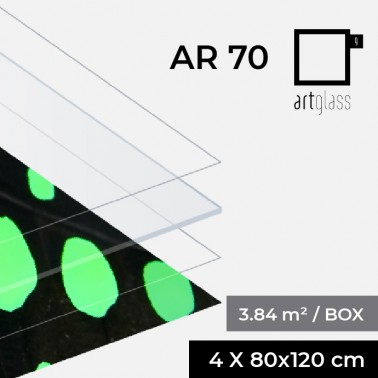
Artglass glass and Artglass Acrylic (premium range)
Technical glazing solutions for projects where presentation and conservation are a priority. The Artglass range includes glass with:
- UV light protection,
- advanced reflection control,
- high optical purity.
They are the recommended choice for sensitive artworks, professional photography, exhibitions and projects where a superior result is required.
Benefits of choosing quality glass for picture framing
Choosing high-quality framing glass represents an investment in both aesthetics and preservation. Firstly, it provides a better visual presentation by eliminating distracting reflections and enhancing fine details. Secondly, it offers protection against external agents such as dust, humidity and ultraviolet radiation, preventing fading and premature deterioration.
In addition, quality framing glass is easier to clean, as it incorporates treatments that repel dirt and reduce fingerprint adhesion. Finally, in professional contexts, using appropriate glazing increases the perceived value of the artwork or service, reflecting care and commitment to artistic conservation.
Applications and uses of framing glass
Framing glass is essential for professional framers, museums, galleries, photographic studios and domestic environments. It is used to protect and enhance paintings, photographs, diplomas, illustrations, posters and decorative objects.
During the mounting process, it is recommended to use mountboards and spacers to prevent direct contact between the artwork and the glass, avoiding condensation or adhesion. This technical detail, often overlooked, is crucial for preserving the integrity of the piece.
Importance of selecting the right glass for each project
Not all projects require the same type of glazing. For domestic artwork with controlled ambient lighting, standard glass may be sufficient, whereas in a gallery with direct lighting, anti-reflective or museum-grade glass with UV filter is essential.
The size of the frame also plays a role: large formats require more rigid or lightweight materials to avoid structural stress. Likewise, the type of artwork (watercolour, photograph, print or drawing) can determine the necessary level of protection. More delicate pieces, especially those containing natural pigments or aged papers, require high UV protection glass to ensure long-term stability.
Applications and uses of framing glass
Framing glass is essential for professional framers, museums, galleries, photographic studios and domestic environments. It is used to protect and enhance paintings, photographs, diplomas, illustrations, posters and decorative objects.
During the mounting process, it is recommended to use mountboards and spacers to prevent direct contact between the artwork and the glass, avoiding condensation or adhesion. This technical detail, often overlooked, is crucial for preserving the integrity of the piece.
How to choose the right glass
The choice of framing glass depends on the size of the artwork, the type of piece and the location where it will be displayed. In our category, you will find different thicknesses, finishes and protection levels to suit every requirement.
For valuable artworks or those displayed in brightly lit environments, it is advisable to choose anti-reflective glass with UV filter. If the aim is to balance aesthetics and functionality, matte or satin glass can be an excellent option. For budget-conscious projects, standard glass remains a reliable solution offering high clarity.
Whatever your needs, Intermol offers a comprehensive selection of framing glass, ensuring quality, durability and a professional presentation.
As a general guideline, selection can be based on the following factors:
- Economical or decorative framing → clear PET and Arraglas (PS).
- Sensitive artworks, photography and professional projects → Artglass glass.
- Large and very large formats, sensitive artworks, photography and professional projects → Artglass Acrylic.
At Intermol, we offer a range of materials specifically selected for the picture framing sector, with solutions adapted to all types of projects.