
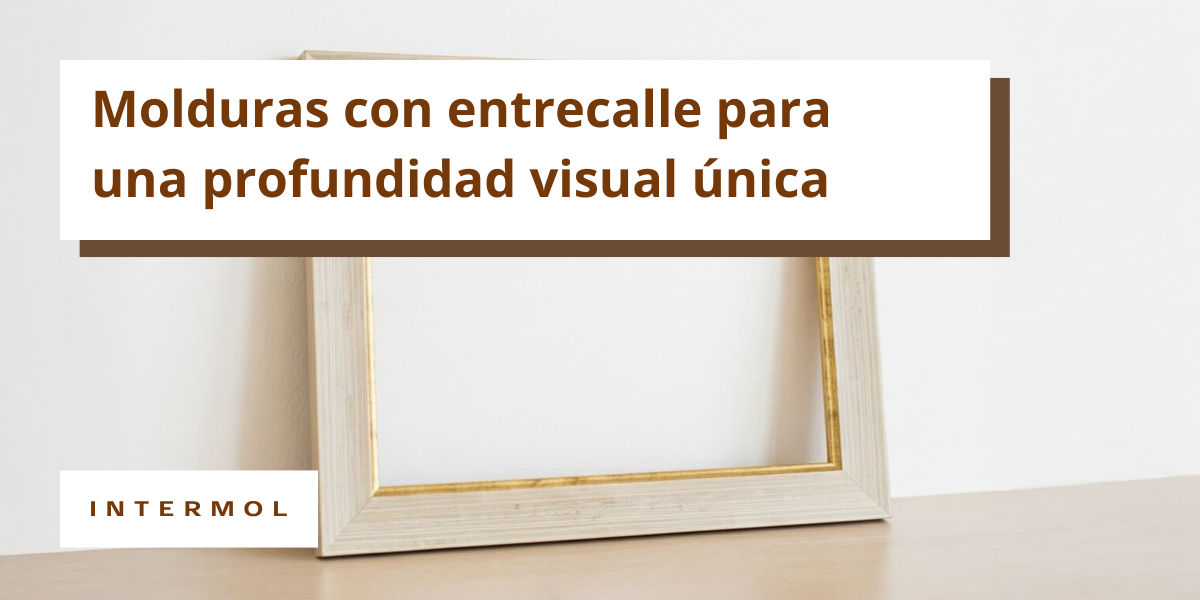
Mouldings with fillet for a unique visual depth
Mouldings with fillet: when and why to use them
Picture mouldings with fillet stand out for their ability to transform the presentation of an artwork thanks to an inner element that adds depth, separation and a cleaner visual finish. The fillet, also referred to as arpillera, acts as an integrated secondary frame and creates an effect highly valued in professional framing, especially when working with watercolours, delicate prints or pieces mounted with a mount. This structure provides the artwork with its own visual space and prevents the main frame from enclosing it too tightly, resulting in a more balanced aesthetic.
What is a fillet in a moulding?
The fillet is a narrow element positioned between the artwork and the outer moulding. Its function is to create a physical separation that provides visual air and protects the piece from direct contact with the glass or the frame profile. Although small in size, its impact on the final result is evident, as it introduces a level of depth that enhances the perception of the framed artwork. The fillet creates an inner space where the artwork appears to rest without pressure, which is particularly valuable in works that require precision and care.
Why use mouldings with fillet?
The use of picture mouldings with fillet responds to both aesthetic and conservation requirements. The separation provided by the fillet prevents the artwork from remaining in contact with the glass, reducing the risk of moisture, marks and deformation. This benefit becomes essential when the piece is made on paper, a material that can easily react to environmental changes. On a visual level, the fillet softens the transition between the artwork and the moulding, creating a more elegant and professional effect. The additional depth turns the frame into a supporting element that respects the prominence of the artwork without diminishing its presence.
Mouldings with fillet for watercolours
Watercolours require a type of framing that preserves the texture of the paper and avoids any direct pressure. The fillet provides this essential margin, keeping the artwork suspended within the frame without being compressed. Thanks to the subtlety of the effect, the watercolour retains its luminosity and chromatic balance. The space created by the fillet also helps prevent the paper from touching the glass, which is crucial to avoid condensation or adhesion over time. The final presentation is more delicate and conveys a sense of respect for the artistic technique.
Uses of the fillet in pieces with mounts
Pieces that include a mount particularly benefit from the presence of a fillet. The mount functions as a compositional element that creates a visual border to enhance the artwork, and the fillet adds an extra level of harmony by allowing a clean transition between the different planes. When the moulding encloses the mount too tightly, the mount loses its ability to define the artwork. By contrast, the fillet creates sufficient space for the mount to maintain its effect and for the presentation to remain coherent. This type of assembly is common in conservation framing and in galleries seeking carefully finished results.
Depth as an aesthetic resource
One of the most valued reasons for using picture mouldings with fillet is the visual depth they generate. This small inner space produces a soft shadow that naturally frames the artwork. The result is a floating effect that is highly appreciated in contemporary projects and in interiors seeking a touch of distinction. Depth allows the artwork to stand out without the need to overload the decoration. It is an elegant resource capable of enhancing the perception of minimalist works, graphic illustrations or photographs printed on fine art paper.
Integration in artworks with volume or special supports
Artworks with a certain volume, such as collages, papers mounted on foam board or relief works, require a frame that can accommodate thickness without exerting pressure on the piece. The fillet facilitates this adaptation by creating additional inner space that prevents tension. This type of assembly is frequently used in professional framing workshops that handle a variety of materials and seek versatile solutions. The artwork settles naturally within the frame, and the overall result maintains a balanced finish.
How to choose the right moulding with fillet
Selecting the appropriate moulding requires consideration of the artwork’s size, the thickness of the support and the final style to be conveyed. A wide-profile moulding creates a solid presence and adds character, while a narrower profile can convey a lighter feel. Colour choice also influences how the artwork is perceived. Natural tones generate warmth, while lacquered finishes add a sense of modernity. The fillet must integrate coherently with these elements to avoid unnecessary contrast. The ensemble should be perceived as a visual unit, with the artwork remaining the central focus.
The combination of moulding, mount and fillet
When the artwork incorporates a mount, the relationship between these elements becomes especially important. The fillet acts as a visual bridge that maintains a balanced separation between the moulding and the mount. By creating a controlled space, the artwork gains greater stability and the design acquires depth without losing harmony. This combination makes it possible to build multi-level compositions without the result appearing forced. For illustrations, engravings or lithographs, the combination of mount and fillet offers a presentation that enhances subtle details while respecting the natural framing of the piece.
Details that enhance the final assembly
The final presentation of a framed artwork with fillet largely depends on the care taken during assembly. The artwork must be perfectly aligned, and the separation created by the fillet must be uniform. Interior cleanliness is essential, as any dust particle becomes more noticeable when visual depth is present. The glass or acrylic should not touch the paper at any point. Proper tension at the back ensures stability and extends the lifespan of the artwork. All of these factors influence the final perception and the quality conveyed by the framed piece in any setting.
Application in decorative spaces and professional projects
The presence of a fillet transforms any artwork into a more sophisticated decorative element. In homes, offices or galleries, this type of framing adds balance and reinforces the aesthetic of the space. Interior design professionals use it to introduce a sense of quality without overloading the visual composition. In exhibition projects, the fillet allows multiple works to be presented coherently by maintaining a uniform margin and creating a clean aesthetic. Consistency in assembly improves the readability of the set and highlights the individuality of each artwork.
Emotional impact and perception of quality
Framing an artwork with a fillet conveys a sense of care and respect. The artwork is perceived as something valuable that deserves special treatment. This emotion influences both the artist and the viewer, as technical detail becomes part of the visual experience. Picture mouldings with fillet offer a deeper and more serene presentation, strengthening the connection with the piece. The floating sensation adds a contemporary touch that enhances the artwork without interfering with its essence.
The use of mouldings with fillet enhances the presentation of the artwork
Mouldings with fillet represent a very complete option for those seeking a balance between aesthetics and protection. The depth they generate enhances the presentation of watercolours, mounted pieces and artworks with volume. The result is an elegant assembly that adds value to any professional framing project. This type of moulding has become a reliable choice for work that demands precision, harmony and a carefully considered presentation.
In Same Category
- Molduras para espejos: tipos, acabados y trucos de instalación
- Cómo elegir molduras para vitrinas y marcos profundos
- Cómo elegir paspartú para cuadros que se colocarán en ambientes clásicos
- Molduras finas para cuadros: cuándo recomendarlas y cuándo evitarlas
- Cómo elegir molduras para cuadros en proyectos de interiorismo residencial