
Mistakes when using foam board and how to avoid them with acid-free materials
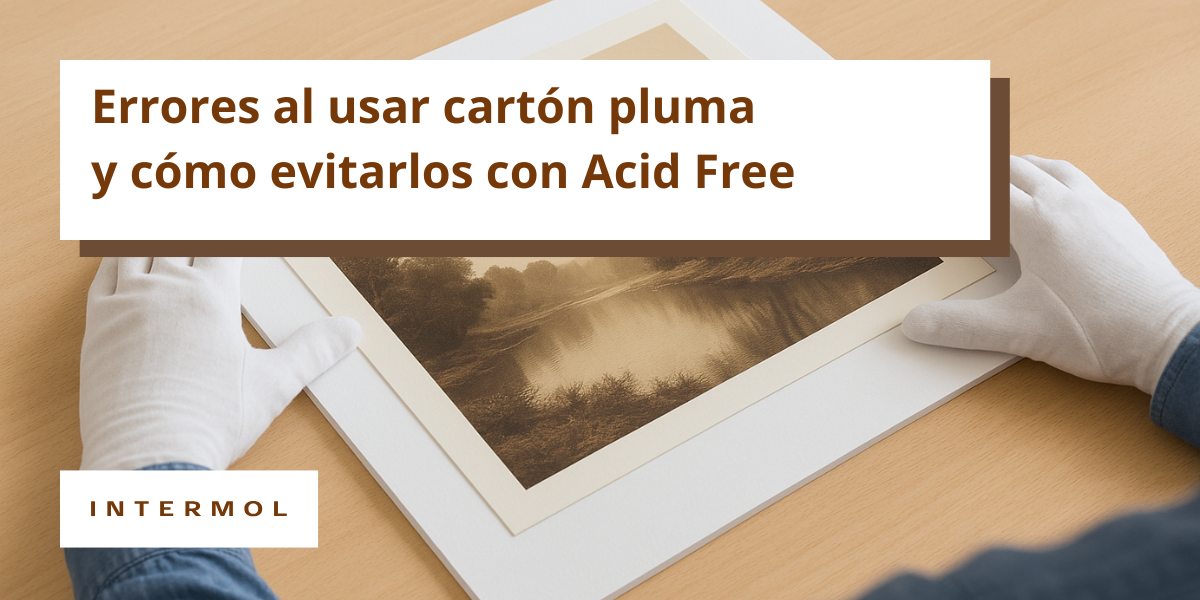
Acid-free Foam Board: The Ideal Solution for Conservation and Professional Framing
The acid-free foam board, also known as acid-free foam core, has become an essential material in the fields of art, photography, historical documentation, and professional presentation. Its structure combines a polystyrene foam core with acid-free paper sheets, preventing deterioration and stains that traditional substrates tend to cause.
What is acid-free foam board and what is it used for?
The standard foam board is widely used for its lightness, strength, and ease of handling, but acid-free foam board adds a critical extra value: conservation. The absence of acids in its layers ensures that the mounted pieces are not affected by the passage of time or by chemicals that could degrade the works or documents.
This type of material is a standard in museum and archival settings. Its use prevents yellowing stains and paper breakage, preserving the original features of any piece on display or stored.
Common mistakes when working with foam board and how to avoid them
Using inappropriate cutting tools
One of the most common mistakes is using dull cutters or tools, resulting in irregular cuts, frayed edges, and the risk of damaging the piece being mounted. The solution is to always work with fresh blades and make smooth yet firm cuts, guided by a metal ruler.
Applying incorrect adhesives
Some liquid adhesives, especially those containing water, cause deformation of the foam board's surface. It is recommended to use spray adhesives specifically designed for this type of substrate, which ensure uniform adhesion without compromising the structure of the material.
Incorrect storage
The foam board should be stored horizontally in a dry and stable environment. Prolonged exposure to moisture or storage at inclined angles may cause curvatures that negatively affect its functionality.
When is it necessary to choose acid-free foam board?
Long-term conservation projects
The acid-free foam board is indispensable when working with pieces that require maximum protection. Archival photographs, paper-based artworks, or any piece susceptible to damage from the acidity of conventional materials should only be mounted on this support.
High-quality exhibitions and presentations
When the presentation requires a flawless finish and long-term stability, there is no better alternative. Acid-free foam board is perfect for art exhibitions, advertising campaigns, and any setting that demands the highest aesthetic quality.
Artistic and design applications
Many artists and graphic designers choose it for its ability to withstand the test of time without deteriorating. It serves as a base for mixed media techniques, as well as for creating creative compositions or lightweight structural supports.
Why choose acid-free foam board for your professional projects?
The acid-free foam board is a safe investment for those looking to preserve, present, and protect works and documents with the utmost care. Its structure free from corrosive agents ensures both conservation and aesthetics, making it the standard reference in both artistic and professional environments. Choosing this material is an investment in durability and excellence in every project.
In Same Category
- Molduras para espejos: tipos, acabados y trucos de instalación
- Cómo elegir molduras para vitrinas y marcos profundos
- Cómo elegir paspartú para cuadros que se colocarán en ambientes clásicos
- Molduras finas para cuadros: cuándo recomendarlas y cuándo evitarlas
- Cómo elegir molduras para cuadros en proyectos de interiorismo residencial