
Guide to combining mouldings with mounts and neutral backgrounds
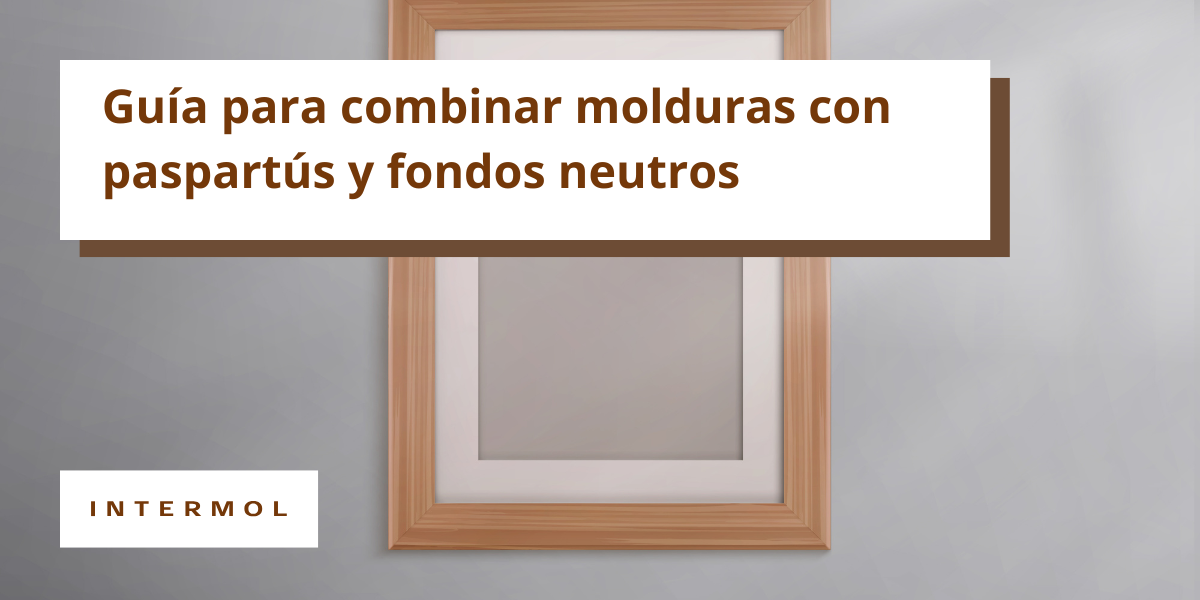
Tips for combining mouldings with mounts and neutral backgrounds
The interaction between the moulding, the mount and the neutral background directly influences the visual hierarchy of an artwork and the way its colours are perceived. Each element contributes a distinct nuance to the final composition and, when they work in a coordinated manner, the piece gains presence, balance and depth. When these decisions are analysed from a design perspective, it becomes clear that framing is not merely about containing the image, but about constructing an environment that enhances its message. The artwork is the focal point; the mount acts as a mediator; the moulding completes the ensemble; the background defines the atmosphere that surrounds the entire visual system.
The role of picture mouldings within the visual hierarchy
The moulding establishes the physical boundary of the artwork and defines the conceptual frame through which it is interpreted. Its materials, colours, widths and textures determine how much attention it draws in relation to the artwork itself. A highly ornamented moulding creates a frame with strong presence, while a minimalist profile functions as a smooth transition towards the image. Thanks to the wide range available in moulding collections such as those offered by Intermol, it is possible to find wooden, aluminium or lacquered profiles that allow the framing to be adapted to different decorative styles, from warm environments to more contemporary proposals. The picture mouldings in our catalogue, available in various widths and finishes, make it easier to determine how the frame should behave within the visual hierarchy without detracting from the artwork.
The mount as a regulator of air, depth and chromatic perception
The mount organises the space around the artwork and provides a transitional area that allows the eye to rest before reaching the moulding. This separation is essential for the artwork to breathe and to be appreciated without interference. In mount design, colour, width and tone directly influence how the artwork is perceived. A light-coloured mount usually enhances the brightness of the image and creates a sense of visual cleanliness; a dark mount adds depth and allows colours to appear more saturated or intense. Width also affects scale: a generous mount evokes gallery-style presentation, while a narrower one concentrates attention on a more limited area. The right choice makes it possible to balance the influence of the moulding on the artwork and to build a clear hierarchy based on well-defined visual layers.
The influence of the neutral background on colour perception
The background on which the artwork is placed, usually the wall, plays a subtle yet decisive role in its presentation. Not all neutral backgrounds are the same; they may be pure white, soft grey, warm beige or cream tones. Each one alters the visual temperature of the artwork in a different way. Against a very warm wall, the cool tones of the piece gain contrast; against a light grey, colours are perceived as calmer and more balanced. This background directly affects the chromatic reading of the image as well as the way it integrates with the moulding and the mount. When mouldings and mounts are combined while taking the neutral background into account, the result is usually more harmonious and stable.
How the three elements interact to define the visual hierarchy
The visual hierarchy is organised in levels. The artwork should always occupy the foreground. The mount follows, introducing a transition that softens the passage towards the moulding. The next level is formed by the moulding, which defines and frames the composition. Finally, the neutral background unifies the artwork with the surrounding space. When these four levels are managed coherently, the viewer’s gaze flows smoothly from the artwork to the environment without unnecessary tension. Within this structure, the correct combination ensures that the artwork is perceived with clarity, chromatic stability and a clear visual order in which each element fulfils a specific function.
The moulding as an expressive outline that defines character
Each moulding contributes a distinct character. Natural wood mouldings convey warmth and closeness. Lacquered finishes create a more modern style. Metal mouldings reinforce contemporary interiors. Narrow profiles are perceived as light and discreet, while wider profiles add presence and visual weight. Thanks to Intermol’s offering within its picture mouldings section, it is possible to select profiles that complement the artwork without competing with it. A robust frame can work very well for artworks with strong chromatic intensity, while a slim profile is ideal for delicate or minimalist pieces. Everything depends on the aesthetic intention of the overall composition and its integration with the chosen mount.
The mount as a tool for modulating depth
A mount is more than an inner frame: it is a surface that controls visual depth. When a light-coloured mount is combined with an artwork featuring intense tones, colours appear sharper. When a dark mount is used with softer images, the composition gains a more enveloping effect. The texture of the mount also plays a role. A slightly textured finish adds visual contrast against the smooth surface of the artwork, while a completely smooth finish creates continuity. Mount design allows these variations to be explored in order to achieve the desired level of depth without any element encroaching on the prominence of the main piece.
The importance of colour in the overall composition
Colour is one of the most sensitive elements within the composition. Changing the tone of the mount can alter the emotional perception of the artwork. Modifying the moulding finish can intensify or soften the vibrancy of colours. The relationship between the tones of the different elements determines whether the image is perceived as warm, cool, vibrant or subtle. An artwork dominated by blues, for example, may gain greater intensity when combined with a white mount and a light wood moulding, while a dark moulding will make the tones appear deeper. Thinking about these combinations as a chromatic system helps to make more informed decisions.
How to integrate the artwork into the environment through neutral backgrounds
A neutral background allows the composition to stand out without the surrounding environment competing with the artwork. This background acts as a visual platform on which the piece rests to gain clarity. When the space is highly colourful or filled with decorative elements, using a neutral background becomes essential to prevent the artwork from losing visual definition. By coordinating moulding, mount and background, the artwork can be integrated into the environment without being overshadowed. A neutral background also enables the viewer to perceive colour nuances within the image more accurately, resulting in a more faithful visual reading.
The balance between prominence and support within the composition
The choice of moulding and mount should always respond to a balance between supporting and highlighting the artwork. If the moulding or the mount takes on too much prominence, the artwork loses strength. If both elements are too discreet, the composition may lack presence. The key lies in ensuring that the artwork remains the centre, the moulding acts as the structural frame, and the mount provides the breathing space that allows everything to function visually. This balanced relationship enables the viewer to perceive the piece naturally, without unnecessary distractions.
Inspiration and possible combinations based on Intermol collections
Intermol collections offer a wide catalogue that makes it easy to experiment with different combinations. A modern artwork with a cool colour palette can work very well with a matte aluminium moulding and an off-white mount, creating a clean and luminous composition. A warm artwork with reddish or terracotta tones may be better enhanced with a natural wood moulding and a soft beige mount, creating a solid and enveloping atmosphere. These proposals, easily achievable with the available profiles, allow framing to be adapted to different styles without losing visual coherence.
The art of combining mouldings, mounts and neutral backgrounds
Combining mouldings with mounts and neutral backgrounds requires viewing the artwork as an integrated whole. The moulding defines boundaries, the mount regulates air and depth, and the neutral background softens the transition towards the surrounding space. When the goal is for the artwork to stand out with elegance and visual stability, thinking of these three elements as a unified structure is essential. By applying this approach, framing becomes a tool that enhances the image without imposing itself, achieving a balanced and lasting presentation.
In Same Category
- Molduras para espejos: tipos, acabados y trucos de instalación
- Cómo elegir molduras para vitrinas y marcos profundos
- Cómo elegir paspartú para cuadros que se colocarán en ambientes clásicos
- Molduras finas para cuadros: cuándo recomendarlas y cuándo evitarlas
- Cómo elegir molduras para cuadros en proyectos de interiorismo residencial